
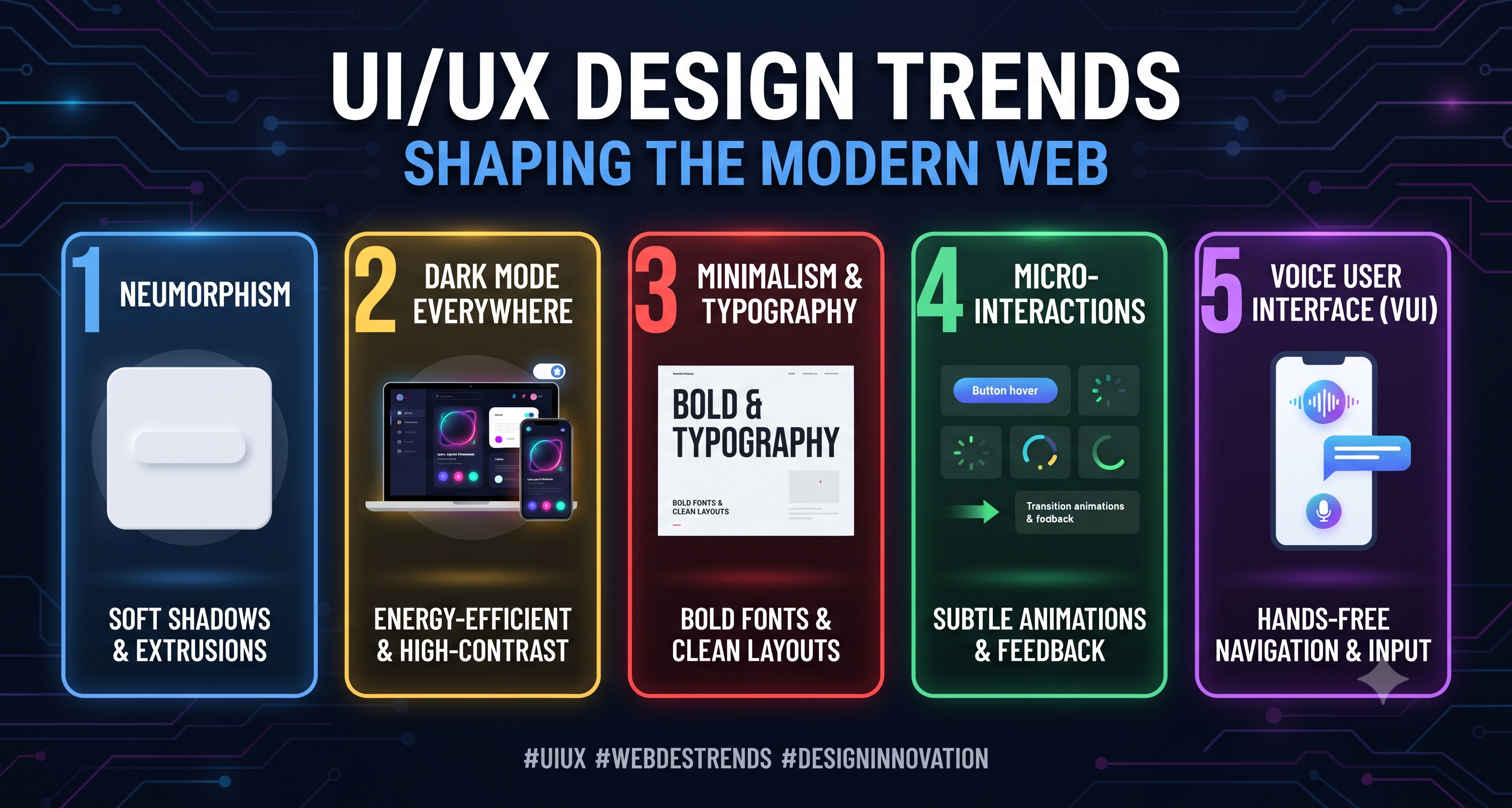
The digital landscape is undergoing a massive transformation. As automated tools, AI-generated layouts, and cookie-cutter templates flood the internet, digital spaces run the serious risk of looking identical. In response, web designers and developers are pushing back, leaning into intentional, highly human-centered design choices that prioritize character, performance, and emotional connection.
Modern web design has evolved far beyond static pages and predictable grids.Today's digital experiences must be dynamic, responsive, and deeply engaging.Let's explore the key UI/UX design trends shaping the modern web, redefining how we build and experience digital products.
1. Bento Box Layouts and Structured Modular Design
Inspired by the clean, compartmentalized organization of a Japanese bento box, modular grid layouts have become a dominant UI pattern. Instead of long, monotonous scrolls of text and stacked images, bento box layouts break information down into neat, digestible cards of varying sizes.
Why it works: It allows users to scan complex information effortlessly. Each box can hold a different type of content—a metric, a video snippet, a feature description, or a CTA—creating a visually rich dashboard feel.
Best for: SaaS landing pages, portfolios, and product feature overviews where hierarchy and space optimization are critical.
2. Kinetic Typography and Dynamic Text Treatments
Static headings are taking a backseat to kinetic typography—animated text that moves, scales, rotates, or responds directly to user input like scrolling or cursor tracking.
Why it works: Text is no longer just a medium for reading; it is a primary visual element. Words that reveal themselves progressively or shift dynamically as you scroll command immediate attention and guide the user's eye naturally down the page.
Implementation tip: Combine variable fonts with lightweight CSS animations to ensure these dynamic effects enhance engagement without hurting page load speeds.
3. Organic Shapes and Anti-Grid Layouts
For years, web design was strictly bound by rigid vertical and horizontal grid systems. While grids maintain order, they can sometimes feel sterile and overly mechanical.Modern web design embraces fluid compositions, asymmetric arrangements, and soft, flowing curves.
Why it works:Organic shapes soften the digital interface, making websites feel more approachable, natural, and artistic. They break the monotony of traditional layouts and help brands stand out from the sea of template-driven competitors.
Balancing act: Crafting an anti-grid layout requires meticulous planning to ensure that readability and mobile responsiveness aren't compromised by asymmetrical chaos.
4. Functional Micro-Interactions and Motion Design
Animation on the web has matured. Gone are the days of distracting, decorative elements that slow down browsers. Today, motion is strictly functional.
Why it works: Micro-interactions provide instant visual feedback to user actions. A button that subtly morphs on hover, a checkmark that animates upon form submission, or a smooth page transition assures the user that the system has registered their input.
The UX impact: These tiny details reduce perceived loading times, eliminate user friction, and inject a sense of "delight" into routine digital interactions.
5. Frosted Touch and Light Skeuomorphism (Glassmorphism 2.0)
Transparency, depth, and tactile materials are making a strong comeback. Modern glassmorphism uses frosted glass effects, subtle background blurs, and soft multi-layered shadows to establish a clear visual hierarchy.
Why it works: It gives flat web designs a sense of physical dimension and tactile realism without looking dated. Users can perceive depth—understanding which elements float on top of others—which is especially helpful for overlay menus, floating navigation bars, and modal windows.
Performance focus: Modern iterations optimize these effects using hardware-accelerated CSS properties so that visual depth doesn't come at the cost of rendering performance.
6. AI-Powered Personalization and Adaptive Interfaces
Websites are shifting from static brochures to dynamic, context-aware environments. Leveraging intelligent UX patterns, modern platforms adjust layout structures, content recommendations, and themes in real-time based on user behavior, intent, and system preferences.
Why it works: Users expect digital experiences tailored precisely to their needs. Whether it's seamless dark mode integration based on OS settings or tailored content blocks that adapt to user interaction patterns, personalization reduces cognitive load and creates a frictionless journey.
Conclusion
The modern web is evolving past generic uniformity. The UI/UX design trends shaping today's digital space—ranging from structured bento grids and kinetic typography to functional motion and organic layouts—all point toward a single goal: intentional, human-centered design.
As a designer or developer, the objective is not to chase every trend blindly, but to selectively integrate elements that elevate user experience, strengthen brand identity, and make the web a more engaging, beautiful place to navigate.