
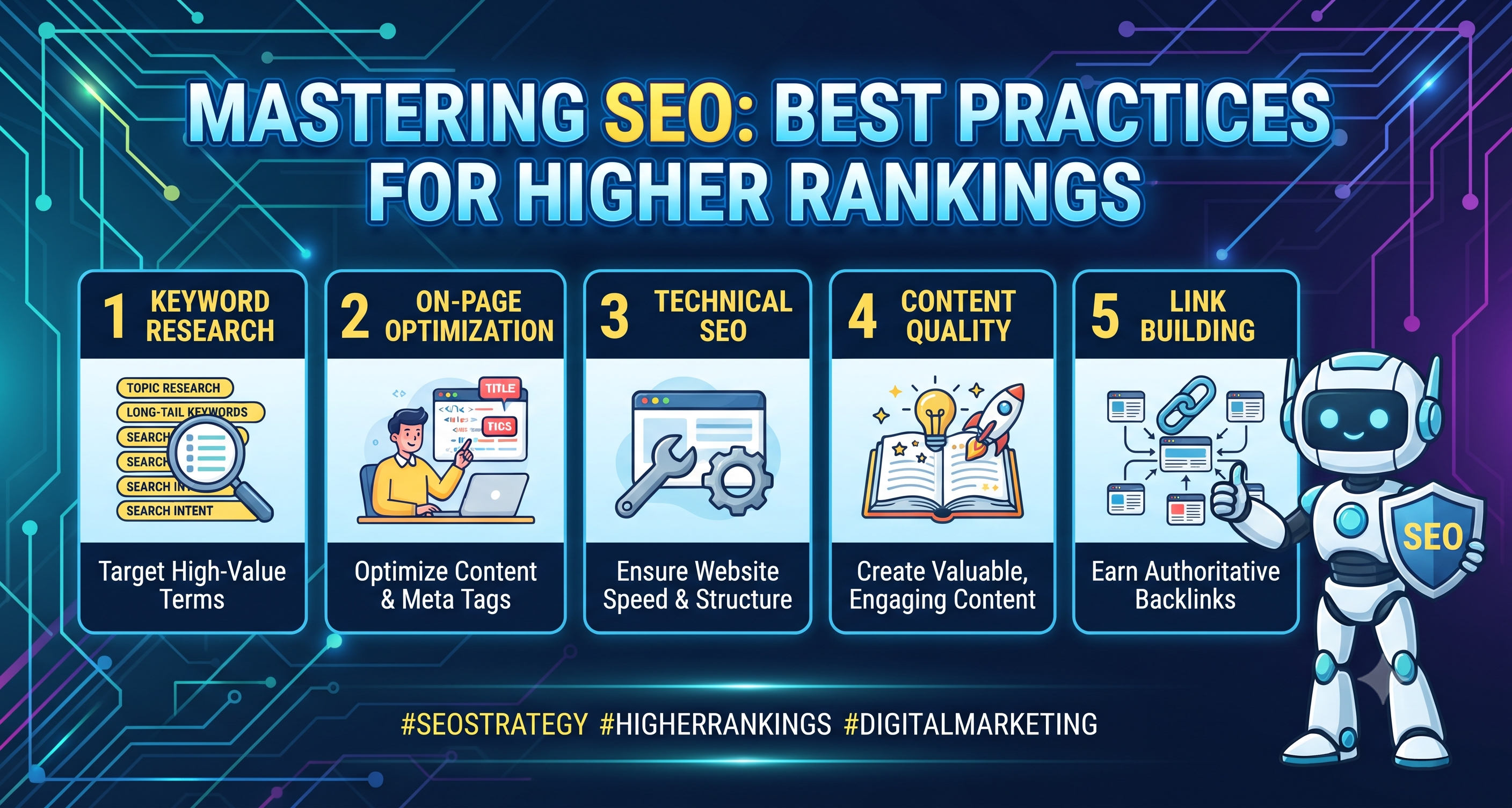
Search Engine Optimization (SEO) remains one of the most powerful and cost-effective channels for driving sustainable, long-term traffic to your website. Unlike paid advertising, where the moment you stop spending money your traffic vanishes, a well-optimized website builds equity over time, compounding its reach and authority.
However, the rules of SEO are constantly evolving. Gone are the days when you could rank a page simply by keyword stuffing or building low-quality backlinks. Today’s search engines—led by increasingly sophisticated AI algorithms—prioritize user intent, technical excellence, content depth, and genuine authority.
Whether you are looking to scale an e-commerce platform, a SaaS blog, or a local business site, mastering the fundamentals is essential. Let’s explore the proven SEO best practices to secure higher rankings and dominate search engine results pages (SERPs).
1. Intent-Driven Keyword Research and Content Strategy
Keywords are the foundation of SEO, but how we approach them has changed dramatically. Keyword research is no longer just about finding high-volume search terms; it is about uncovering search intent—the underlying goal a user has when typing a query into a search engine.
Understand the Four Intent Types: Users generally search with one of four intents: Informational (wanting to learn something), Navigational (looking for a specific brand or site), Commercial (comparing products before buying), or Transactional (ready to make a purchase).
Target Long-Tail Keywords: While broad, short-tail keywords (e.g., "CRM software") have massive search volumes, they are often dominated by enterprise giants. Long-tail keywords (e.g., "best lightweight CRM software for remote real estate agents") have lower volume but much higher conversion intent and far less competition.
The Fix: Align your content format with what Google already ranks for your target keyword. If search results for a term are dominated by listicles and guides, don't try to rank a product landing page for it. Give the users the exact format they are looking for.
2. Crafting Comprehensive, High-Quality Content
Content is still king, but only if it provides genuine value. Search engine algorithms have become exceptionally good at identifying thin, plagiarized, or superficial content designed solely to game rankings.
Focus on Depth and E-E-A-T: Google evaluates content through the lens of E-E-A-T (Experience, Expertise, Authoritativeness, and Trustworthiness). Content written by people with firsthand experience, backed by credible data and clear explanations, consistently outperforms generic overviews.
Structure for Readability: Use descriptive headings (H2, H3), bullet points, bold text, and short paragraphs. Readers and search bots alike appreciate clean content architecture that makes information easy to digest.
Internal Linking: Don't let your articles exist in isolation. Strategically link your new articles to related cornerstone pieces on your site. Internal links distribute "link juice," establish a logical site hierarchy, and keep users engaged on your site longer.
3. Optimizing On-Page SEO Elements
On-page SEO involves optimizing individual web pages to rank higher and earn more relevant traffic. While content quality is paramount, search engines rely on structured HTML elements to understand what your page is about.
Compelling Title Tags and Meta Descriptions: Your title tag is arguably the most important on-page factor. Keep it under 60 characters, include your primary keyword naturally, and make it compelling enough to drive clicks. While meta descriptions don't directly influence rankings, a well-written description acts as ad copy in the SERPs, drastically improving your Click-Through Rate (CTR).
URL Structure: Keep URLs short, clean, and descriptive. Instead of
[yoursite.com/p?id=10492](https://yoursite.com/p?id=10492), use[yoursite.com/clean-code-best-practices](https://yoursite.com/clean-code-best-practices).Image Optimization: Large images are the silent killers of page speed. Compress your images, use modern next-gen formats like WebP, and always write descriptive alt text featuring relevant keywords to aid accessibility and image search rankings.
4. Technical SEO and Core Web Vitals
You can have the best content in the world, but if search engine bots cannot crawl, index, or render your site efficiently, you will never rank. Technical SEO ensures that the infrastructure of your website meets modern performance standards.
Prioritize Core Web Vitals: Google’s Core Web Vitals measure user experience around page loading speed (Largest Contentful Paint), interactivity (Interaction to Next Paint), and visual stability (Cumulative Layout Shift). Fast, responsive sites are heavily favored in rankings.
Mobile-First Indexing: Google predominantly uses the mobile version of your content for indexing and ranking. Ensure your responsive design works flawlessly across all devices.
Fix Broken Links and Redirects: Routinely audit your site for 404 errors and broken external links. Set up proper 301 redirects when moving or deleting pages to preserve link equity and avoid frustrating visitors.
XML Sitemaps and Robots.txt: Ensure your XML sitemap is up to date and submitted to Google Search Console, and use your robots.txt file to guide search bots away from private or duplicate pages.
5. Building High-Authority Backlinks (Off-Page SEO)
Backlinks—links from other reputable websites pointing to yours—act as votes of confidence in the eyes of search engines. Websites with strong backlink profiles are viewed as authoritative and trustworthy.
Quality Over Quantity: Getting a link from one high-authority, industry-relevant news site or blog is worth more than hundreds of spam directory links.
Earn Links Through Linkable Assets: Create exceptional resources that people naturally want to reference—such as original industry research, comprehensive infographics, free tools, or in-depth ultimate guides.
Strategic Outreach: Pitch your content to industry journalists, bloggers, and site owners who are already writing about related topics. Guest blogging and digital PR are powerful avenues to earn organic, high-value mentions.
Conclusion
Mastering SEO is a marathon, not a sprint. It requires patience, technical discipline, and an unwavering commitment to delivering value to your audience.
By grounding your strategy in deep search intent, producing authoritative content, optimizing your on-page elements, maintaining a bulletproof technical foundation, and earning quality backlinks, you will build a resilient digital presence. Implement these best practices consistently, track your performance metrics in search console, and watch your rankings climb.